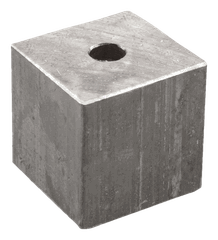
How Much Do Sash Weights Cost? A UK Price Guide (and Why £/kg Matters)
If you’re re-cording a box sash window, the weights themselves are usually the cheap part of the job — but only if you don’t overpay. The catch is that no two UK suppliers quote them the same way, so the headline figures look wildly different even when the metal in your hand is identical. We’ve compared the prices so you don’t have to, and the single most useful number to know before you buy is the price per kilogram.
The short answer: what sash weights actually cost
Across the UK suppliers we track, lead sash weights work out at roughly £2.76 per kilogram at the cheapest end up to about £7–9 per kilogram at a builders merchant. Most mainstream suppliers sit in the middle, somewhere around £3.0–4.5/kg ex VAT.
That spread isn’t a typo. The dearest supplier can charge well over twice — sometimes more than three times — what the cheapest charges for the same weight of the same metal. So the honest answer to “how much do sash weights cost?” is: it depends almost entirely on who you buy from, and a little on what size and section you need.
A few things to keep in mind with those figures:
- They’re for lead weights at full size. Round weights and small “make-weight” pieces always cost more per kilo than full square or rectangular bars.
- The cheapest headline isn’t always in stock, and a low £/kg can be wiped out by delivery (more on that below).
- Prices move with the lead market, so any single figure is a snapshot. For today’s numbers, see the live £/kg comparison table.
Why prices vary so much: the like-to-like problem
The reason sash weights look so confusing to price is that suppliers quote them in genuinely different ways. Until you strip all that back, you simply can’t tell who’s cheap.
Here are the things that make two prices impossible to compare on their face:
- VAT basis. Trade-focused sites usually quote ex VAT; consumer and merchant sites quote inc VAT. That’s a flat 20% difference before anyone has weighed a thing. A “£3.00” and a “£3.60” can be the exact same price.
- The pricing model. Some suppliers sell per piece, some per kilogram, and a few still price per pound (lb). A per-piece price hides the weight; a per-lb price needs converting before it means anything in metric.
- Section and size. Weights come round, square or rectangular, in common sizes from 25 mm up to 50 mm, in lengths from a ~600 mm retail piece to a ~1200 mm full bar. Smaller and round pieces cost more per kilo than big square bars.
- Bulk breaks. Several suppliers drop the price once you order in quantity, so a single weight and a box of twenty aren’t the same rate.
- Delivery and carriage. Lead is dense and heavy, so postage is a real cost — and it’s quoted separately, if at all.
Put all five together and you can see why two suppliers selling the identical bar might advertise numbers that look 50% apart.
Why £/kg is the only fair way to compare
There’s exactly one number that cancels out all of that noise: price per kilogram, normalised to the same VAT basis.
Weight is what you’re actually buying. A sash weight does one job — it balances the sash — and it does that job through its mass. Two 9 kg weights are interchangeable whether one was sold “per piece” and the other “per pound”, whether one was ex VAT and the other inc. Convert both to £/kg on the same VAT footing and the cheaper one is simply, provably cheaper.
This is the whole reason this site exists. When you reduce every UK supplier to a single comparable £/kg figure, that 2–3.5× spread jumps out — and it’s money you can keep just by buying from the right place. No clever negotiation, no trade account, just comparing like for like.
One caveat we’d never hide: compare within the same size bucket. A round 25 mm make-weight at £6/kg isn’t being “ripped off” against a square 50 mm bar at £3/kg — small and round pieces genuinely cost more to produce per kilo. The fair comparison is square-full-size against square-full-size, which is exactly how the table is bucketed.
A worked example: the same job, two very different bills
Say you’re re-balancing a typical pair of sashes. A modest single-glazed sash might need around 9 kg of weight per side (split across its two cords), so call it roughly 18 kg of lead for the pair — a realistic, if approximate, order.
Now run that 18 kg through two suppliers at opposite ends of our range:
| Supplier type | £/kg (ex VAT) | 18 kg ex VAT | 18 kg inc VAT |
|---|---|---|---|
| Cheap end | ~£2.80 | ~£50 | ~£60 |
| Mainstream | ~£3.50 | ~£63 | ~£76 |
| Builders merchant | ~£8.00 | ~£144 | ~£173 |
All figures are approximate and for illustration — your actual weight will depend on the real sash, and live prices move. But the shape is the point: the same 18 kg of lead can cost you about £60 or about £173 depending purely on where you click “buy”. That’s before delivery. For the same job, the metal is identical; only the supplier changed.
If you’re not sure how much weight your sashes need, our sash weight calculator walks you through estimating it from the sash dimensions and glass.
Trade vs consumer pricing: that 20% VAT gap
A lot of the confusion when you’re shopping comes down to who a website is written for.
- Trade suppliers assume a VAT-registered buyer and headline their prices ex VAT — the lower-looking number. A VAT-registered tradesperson reclaims that VAT, so ex VAT is the price that matters to them.
- Consumer and merchant sites headline inc VAT — what you actually hand over at checkout if you’re a homeowner.
VAT in the UK is 20%, so to turn an ex-VAT price into the all-in figure, multiply by 1.2 (and divide an inc-VAT price by 1.2 to go the other way). It sounds obvious, but mixing the two is the single commonest reason a price looks better or worse than it is. The live table lets you toggle between ex and inc VAT so you’re always comparing apples with apples — flip it to inc VAT if you’re a homeowner paying the full price.
The delivery trap: heavy metal, heavy postage
Here’s the one that catches people out. Lead is one of the densest things you can put in a parcel, so carriage on sash weights is not trivial. On a small order, delivery can quietly dwarf any saving you made on the headline £/kg.
A few patterns worth watching:
- Some suppliers add a carriage charge below a certain order value, then offer free or capped delivery once you cross a threshold.
- A handful of “phone for price” suppliers — the likes of SwifSash, Coastal, Oxon and Hebden & Holding — quote delivery case by case because courier costs on heavy goods fluctuate.
- Buying a single weight by post is rarely the best value; the per-kilo rate and the postage both tend to favour ordering the full set you need in one go.
So before you commit, add the delivery cost to the basket and re-do the sum. A supplier that’s 30p/kg dearer but ships your order for less can easily come out ahead on a small job.
Prices move with the lead market
Sash weights aren’t priced in a vacuum — lead is a traded commodity, and its spot price on the London Metal Exchange (LME) feeds straight through to what suppliers charge. That’s why several of them carry a quiet “prices subject to the lead market” line in their terms.
In practice, retail prices are fairly sticky — they don’t lurch about day to day, they tend to drift every few weeks as suppliers re-rate. But the underlying metal does move, and over a year that movement is real. It’s exactly why this site refreshes supplier prices weekly and shows a daily lead spot price alongside the table, so you can see both where the suppliers sit today and which way the wind is blowing.
If you want the full picture of what sits behind a lead-weight price — the metal market, recycling, energy, the pound, VAT and casting — and how much the suppliers we track charged years ago, see our guide to what influences the cost of a lead sash weight.
How to get the best price
You don’t need a trade account or a knack for haggling. You need to compare the right number.
- Open the live comparison table. It ranks every tracked UK supplier cheapest-first on £/kg, so the best value is right at the top.
- Set the VAT toggle to match you — inc VAT if you’re a homeowner, ex VAT if you reclaim it.
- Compare within your size and section bucket (e.g. square, full-size), not against a single global figure.
- Add delivery before you decide. Factor carriage and any minimum-order charge into the real cost of your order.
- Check stock and the lead spot price. The cheapest line is only a deal if it’s actually available, and a rising market is a reason to buy sooner rather than later.
Do those five things and you’ll typically land near the bottom of that 2–3.5× spread rather than the top — which, on a whole-house re-cord, is a meaningful saving.
FAQ
Why are sash weights priced by the kilo?
Because weight is the thing that does the work. A sash weight balances the sash through its mass, so a kilo of lead is a kilo of lead whoever sells it. Pricing per kilogram is the only way to compare suppliers who otherwise quote per piece, per pound, ex VAT or inc VAT — it’s the common denominator that cancels all of that out.
Are lead weights getting more expensive?
Lead weight prices track the lead commodity market, so they rise and fall with it rather than only ever climbing. Day to day they’re stable, but they re-rate every few weeks and can move noticeably over a year. That’s why we pair the weekly price table with a daily lead spot price — so you can see the trend, not just today’s number. We dig into the full history — including what these suppliers charged 10–15 years ago — in what influences the cost of a lead sash weight.
Where can I buy sash weights near me?
Most people buy online and have weights delivered, since the suppliers with the best £/kg are national rather than local. A builders merchant will likely have some in stock for collection, but they’re usually the dearest option (around £7–9/kg). If “near me” matters for collection, weigh that convenience against the saving — and the delivery cost — on the comparison table.
Should I just reuse my old weights?
Often, yes. If a sash cord has snapped and the weight has simply dropped into the box, the weight itself is usually fine — you may only need new cord, not new weights. You’d buy weights when one is missing, broken, or when heavier glass (such as double glazing) means the sash needs more balance than before. If you’re unsure whether your sashes are correctly balanced, it’s worth asking a joiner.
Lead, cast iron or steel — does it change the price?
It can. Lead is the traditional choice and what most of our pricing covers. The material affects both cost and how the weight fits your box, since lead is far denser than cast iron or steel. We cover the trade-offs in full in our guide to lead vs cast iron vs steel sash weights.
Compare prices before you buy
The honest bottom line: sash weights are cheap if you buy well and surprisingly dear if you don’t, and the difference comes down to one number. Reduce every supplier to £/kg on the same VAT basis, add the delivery, and the best value is obvious.
That’s exactly what the table on this site does for you. Take a minute to compare live £/kg prices from UK suppliers — ranked cheapest-first, with an ex/inc VAT toggle and the day’s lead spot price — before you order. It’s the quickest way to make sure you land near the bottom of that 2–3.5× spread.