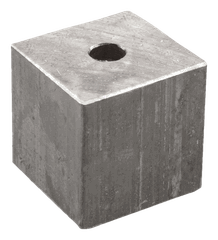
What Influences the Cost of a Lead Sash Weight?
A lead sash weight is one of the simplest things you can buy — a cast bar of soft grey metal that does nothing but hang in a box frame and balance a window. So why does the same weight cost one person £55 and another £130? And why has the price you’d have paid for it wandered up and down over the years rather than just sitting still? We track UK lead-weight prices every week, and once you pull the data apart, the answer comes down to a short list of forces. Here’s what actually moves the cost of a lead sash weight, with real numbers — including what the suppliers we track were charging years ago.
First, the surprising part: the metal is the cheap bit
Start with the raw material, because it anchors everything else. Lead is a traded commodity, priced on the London Metal Exchange (LME) in US dollars per tonne. In mid-2026 it sits at roughly $1,900–2,000 a tonne, which works out at only about £1.50 per kilogram of actual metal.
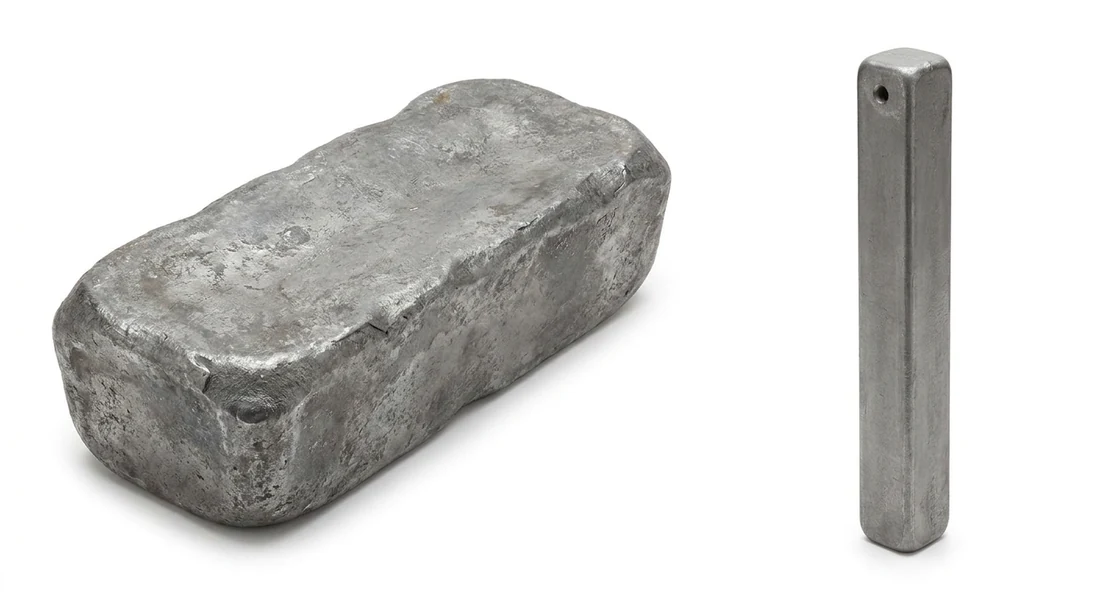
Now look at what a finished lead sash weight sells for. Across the UK suppliers we track, full-size square weights run from about £3.00/kg to £7.41/kg ex VAT — a 2.47× spread for the same metal. In other words, the lead itself is maybe a third of the cheapest price and less than a quarter of the dearest. Everything above that £1.50 is conversion, VAT, margin and carriage — and that’s exactly where the price differences live.
So when people ask why lead weights are “expensive,” the honest answer is that the metal isn’t. What you’re really paying for is everything that happens to it after it leaves the smelter.
Driver 1: the lead commodity price (and why it’s cyclical, not a one-way climb)
The LME lead price is the single biggest macro force under everything. When metal goes up, the floor under retail prices rises with it; when it falls, that floor drops. But the key thing most people get wrong is assuming lead “only ever goes up.” It doesn’t — it’s cyclical.
Here’s roughly where the LME lead price has been over the last 15 years:
| Year | Approx LME lead (USD/tonne) | What was happening |
|---|---|---|
| 2010–2011 | ~$2,070 → ~$2,410 | Post-financial-crisis recovery |
| 2015–2016 | ~$1,820–1,850 | The soft patch |
| 2018 | ~$2,260 | Firm |
| 2020 | ~$1,820 | Covid low (dipped near $1,626) |
| 2021–2022 | ~$2,130–2,210 | Post-Covid surge, energy crisis |
| 2023 | ~$2,136 | Easing back |
| 2025 | ~$1,963 | Drifting down |
| mid-2026 | ~$1,920 | Today |
Figures are approximate annual averages; the LME cash price is what suppliers ultimately buy against.
The pattern is clear: over a decade and a half, lead has mostly traded in a band of roughly $1,700–$2,700 a tonne, with most years clustered around $1,800–$2,200. It rose after the crash, sagged in 2015–16, dipped in Covid, spiked in 2021–22, and has been drifting back down since. That’s why this site pairs the weekly price table with a daily lead spot price — so you can see which part of the cycle we’re in, not just today’s shelf price.
Driver 2: retail prices are “sticky” — what suppliers used to charge
Here’s the part that genuinely surprises people. Because suppliers buy stock in batches, hold inventory and reprice infrequently, shelf prices lag the metal — they rise slowly and fall even more slowly. A 10% move on the LME almost never shows up as a clean 10% move at the checkout.
We can prove this, because the suppliers we track have a paper trail. Using archived snapshots of their own websites, here’s what a 38 mm square, ~9 kg lead weight cost over the years, reduced to £/kg ex VAT so it’s comparable:
| Supplier | ~2015–16 | ~2019–20 | ~2022–23 | Today |
|---|---|---|---|---|
| Draftfix | £2.12 (2015) | £2.78 (2020) | £3.26 (2023) | £3.26 |
| IronmongeryDirect | £2.96 (2016) | £3.86 (2019) | — | £3.30 |
| Reddiseals | — | £2.79 (2019) | £3.45 (2022) | £3.11 |
| SD Hardware | — | £3.89 (2019) | £3.61 (2022) | £4.42 |
Derived from archived supplier pages (Internet Archive). £/kg is calculated from the listed price and the weight’s mass; today’s figures are from our live data.
A few things jump out:
- Draftfix climbed steadily — about +54% from £18.91 (£2.12/kg) in 2015 to £29.16 (£3.26/kg) today, and it has held that price unchanged since 2023.
- Reddiseals actually peaked higher than it sits now: it ran at £25.26 from 2019 into 2021, jumped to £31.33 (£3.45/kg) through 2022–2025, and today’s £28.22 (£3.11/kg) is below that peak — a recent cut.
- SD Hardware went the non-obvious way: £3.89/kg in 2019, down to £3.61/kg in early 2022, then up to £4.42/kg by 2025.
- IronmongeryDirect is the cautionary tale against assuming prices only rise. The same SKU was an eye-watering £49.90 (£5.48/kg) back in 2010, fell to around £24.50 by 2013, sat near £35 in 2019–20, and is £29.95 today — roughly 40% cheaper than it was 15 years ago.
The clearest illustration of the cycle is Power Fixings, who sell cut-to-size lead by the kilo. Their small-quantity rate was £7.59/kg in late 2023, fell to £6.33 in 2024, then £5.69 in early 2025, and £3.81 by August 2025 — roughly halving in under two years as the post-2022 lead spike unwound, landing near the ~£3.00–3.15/kg they charge now.
The lesson: there is no single “what lead weights cost” figure that holds over time. Prices move with the market, but slowly, unevenly, and at each supplier’s own pace — which is precisely why comparing them on the day you buy matters.
Driver 3: recycled lead and the battery cycle
Most lead in circulation today isn’t freshly mined — it’s recycled, and the UK relies on secondary (recycled) lead almost entirely, since there’s essentially no primary lead mining left here. The dominant source is spent lead-acid batteries: the great majority of lead demand sits in batteries, and they’re highly recyclable.
That ties the metal cost to the scrap cycle. When battery scrap is plentiful and collection is healthy, recycled lead supply is good and prices soften. When scrap tightens or battery demand is strong, the metal cost firms up. It’s a quieter driver than the LME headline, but it’s the supply side of that same number.
Driver 4: the pound
Lead is priced in US dollars, but you pay in pounds — so the exchange rate matters even when the dollar price doesn’t move. A weak pound makes lead dearer in sterling; a strong one cushions it. This was stark in 2022, when the pound fell as low as ~$1.07: UK buyers were paying materially more per tonne in sterling than the dollar move alone implied. Part of the 2022–23 bump you can see in the supplier table above is currency, not metal.
Driver 5: energy and the cost of casting
Smelting, refining and casting lead is energy-intensive — you’re melting metal at over 300°C and re-casting it into bars. The 2021–2023 European energy crisis pushed production costs up sharply and squeezed smelter margins, and that feeds through to finished-product prices even when the LME number looks calm. It’s a big reason retail lead-weight prices stayed elevated into 2023–24 while the metal itself had already started easing.
Driver 6: VAT and who the price is written for
UK lead weights carry 20% VAT, and a chunk of the confusion when you shop comes down to whether a price includes it. Trade-focused suppliers headline ex VAT (the lower-looking number, which a VAT-registered buyer reclaims); consumer and merchant sites headline inc VAT (what a homeowner actually pays). That’s a flat 20% gap before anyone’s weighed a thing — a “£3.00” and a “£3.60” can be the identical price. Our live table lets you toggle ex and inc VAT so you’re always comparing like with like.
Driver 7: casting, cutting and finishing
A sash weight isn’t bulk commodity lead — it’s cut to size in small steps, sometimes drilled, made to a specific length and shape, often in small, made-to-order batches. That handling and finishing labour is a fixed cost spread over a small order, so the per-kilo conversion cost is far higher than for a tonne of plain lead. Some suppliers even surcharge for the cut-to-size service. This is a real cost, not a markup — but it’s also where suppliers have room to price differently.
Driver 8: delivery, because lead is heavy
Lead is one of the densest things you can post (about 11.3 g/cm³), so even a modest order is a heavy parcel, and carriage scales with weight. Suppliers commonly waive delivery only above a high threshold — for example, free over 500 kg, otherwise around £50 + VAT — so on a small household order, postage can be a meaningful slice of the total. A supplier that’s a few pence/kg dearer but ships cheaply can easily beat a “cheaper” one once carriage is added.
Driver 9: shape and size
Geometry changes the per-kilo cost. Large square or rectangular bars are cheapest to cast and cut — simple moulds, minimal handling per kilo. Round weights and small “make-weight” pieces cost more per kg: round sections need different tooling, and a tiny balancing piece carries almost the same per-piece labour as a full bar but over far less metal. In our data, full-size square weights cluster around £3/kg, while small make-weights run to a median of about £5.56/kg and beyond. So always compare within the same shape-and-size bucket — a round make-weight at £6/kg isn’t being “ripped off” against a £3/kg square bar.
Driver 10: how few firms still cast them
Finally, competition — or the lack of it. Only a handful of UK firms still cast lead sash weights to order. In bespoke or cut-to-size niches, that limited competition means pricing isn’t strongly disciplined, and some sizes or shapes carry more margin than others. It’s one reason the spread between cheapest and dearest stays as wide as 2–3.5× even though the underlying metal is identical.
So why do two suppliers charge so differently today?
Put the drivers together and the present-day spread makes sense. Every supplier buys lead at roughly the same ~£1.50/kg. On top of that they each stack their own casting cost, VAT basis, carriage policy, batch size and margin — and because the metal is the small part, those choices dominate the final number. That’s how you end up with £3.00/kg at the keenest supplier and £7.41/kg at a builders’ merchant for the same bar of lead.
None of which you can see from a single headline price. The only way to cut through it is to reduce every supplier to the same £/kg on the same VAT basis and rank them — which is exactly what our live comparison table does, refreshed weekly, with the daily lead spot price alongside so you can see where in the cycle you’re buying.
For the practical “how much should I pay and how do I get the best price” version of this, see our UK sash weights price guide. If you’re weighing lead against cast iron or steel, our guide to lead vs cast iron vs steel sash weights covers how material changes both fit and cost.
FAQ
Are lead sash weights getting more expensive?
Not in a straight line. Lead-weight prices track the lead commodity market, which is cyclical — it rose into 2011, dipped in 2015–16, spiked in 2021–22 and has drifted down since. Some suppliers we track are dearer than they were five years ago; others, like IronmongeryDirect, are actually cheaper than they were in 2010. Day to day prices are stable, but they re-rate every few weeks, which is why we pair the weekly table with a daily spot price.
What is the biggest factor in the price of a lead weight?
The supplier’s pricing, not the metal. The raw lead is only about £1.50/kg, so the difference between a cheap and a dear weight comes from casting cost, VAT basis, carriage, batch size and margin. That’s why the same weight can vary by 2–3.5× across UK suppliers.
Does the lead spot price change what I pay tomorrow?
Rarely overnight. Retail prices are “sticky” — suppliers buy in batches and reprice infrequently, so a move on the London Metal Exchange takes weeks to filter through, if it does at all. A rising market is a reason to buy sooner; a falling one rewards waiting, but only modestly.
Why is cut-to-size lead priced per kilo when others sell per piece?
Because cut-to-size suppliers (like Power Fixings) sell you exactly the length you need rather than fixed weights, so per-kg is the natural unit. It also makes them easy to compare — per-kg is the common denominator we convert every supplier to, whether they quote per piece, per pound or per kilo.
Compare before you buy
The cost of a lead sash weight is mostly not the lead — it’s the layer of casting, VAT, carriage and margin on top, and every supplier stacks that differently. Prices also drift with a cyclical metal market, so any single figure is a snapshot. The one move that beats all of it is to compare suppliers on the same £/kg, on the day you buy.
Take a minute to compare live £/kg prices from UK suppliers — ranked cheapest-first, with an ex/inc VAT toggle and today’s lead spot price — before you order.