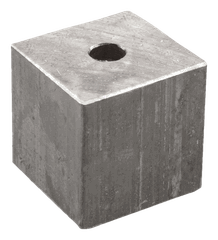
Can You Make Sash Weights from Rolled Lead Sheet? A DIY Alternative
Sometimes you need a sash weight and you can’t easily get the right one — an odd size, an urgent repair, a narrow pocket, or a Sunday with the merchants shut. A trick that comes up again and again among joiners and DIYers is to roll up lead sheet — the same Code 4 flashing that goes on roofs — into a cylinder and use that as a counterweight. It works, it’s the same metal as a cast weight, and it can get you out of a hole. This guide explains how, when it’s actually worth it, and the honest catch.
Why lead sheet works as a weight
A sash weight does one job: it balances the sash through its mass. It doesn’t care what shape the lead is in, only how much it weighs. So any dense lump of lead the right weight, that fits the pocket and hangs on a cord, will do the job — including lead sheet rolled up tight.
Rolled milled lead (roofing flashing) is a sensible candidate because:
- It’s the same metal — lead is lead, around 11.3 g/cm³, the densest common material for the job.
- It’s soft and malleable, so it rolls into a tight cylinder by hand and can be trimmed to adjust the weight.
- Code 4 lead (the common grade) is about 1.8 mm thick and roughly 20.4 kg per square metre, so a modest strip rolled up makes a surprisingly heavy slug.
In other words, you’re making a home-rolled version of a cast weight out of the same raw material.
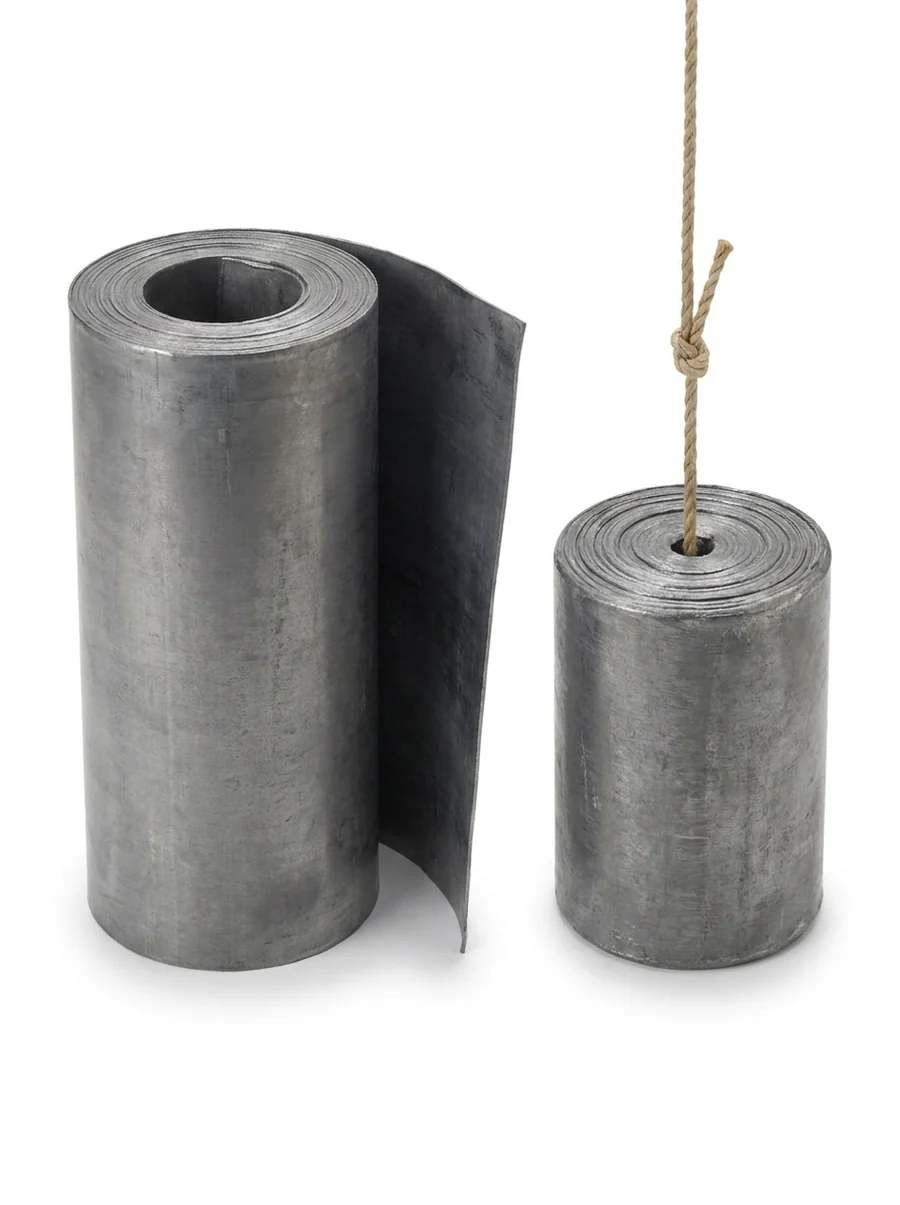
How to roll a lead-sheet weight
The method is simple, but take the safety notes below seriously first.
- Work out the weight you need. Each side of the sash should carry roughly half the weight of that sash. Our sash weight calculator guide walks you through the figure. Keep a set of kitchen or luggage scales to hand.
- Cut a strip of lead sheet to a width a little less than the depth of your weight pocket, so the finished roll drops in freely.
- Roll it tight, starting with a firm core, keeping the cylinder even and as compact as you can — air gaps are wasted space. Add or remove sheet until the scales show your target weight.
- Secure the roll so it can’t unravel in use — fold the leading edge in firmly, or bind it. A roll that springs open in the box is worse than useless.
- Attach the cord. Either form a small hole through the centre for the cord and a stop knot, or fold the cord into the roll as you wind so it’s gripped along its length. It must not pull free.
- Test the balance through the full travel of the sash, exactly as you would with a cast weight — it should stay put wherever you leave it. Trim a little lead off, or add a turn, to fine-tune.
For just topping up an existing weight rather than replacing it, a small rolled offcut works the same way a shop-bought makeweight or deflector weight does — slide it down the cord onto the main weight.
Safety first — lead is a hazardous material
This matters, so it gets its own section. Lead is toxic, and handling sheet lead means handling bare metal and offcuts.
- Wear gloves and wash your hands thoroughly afterwards, before eating or touching your face.
- Don’t grind, sand or heat it — that’s what creates the dust and fumes you must not breathe. Cutting with a knife or shears is fine; making dust is not.
- Keep offcuts and swarf away from children, pets and food, and dispose of scrap lead responsibly (it’s fully recyclable — most merchants or scrap yards take it).
- If you’re at all unsure whether the window is safely and correctly balanced afterwards, ask a joiner. Sash work involves heavy weights and old timber.
The honest catch: it’s rarely cheaper, and never neater
Here’s the part the “just roll your own” advice usually leaves out.
- It’s bulkier per kilo. A rolled sheet has tiny air gaps a solid cast bar doesn’t, so it’s less dense in practice — you may not be able to fit enough weight into a narrow pocket where a slim cast bar would slide straight in. For the most weight in the least space, solid cast lead wins.
- It’s not usually cheaper. Lead sheet is sold by the roll for roofing and priced per square metre; by the kilo it’s broadly the same money as a cast sash weight, sometimes more. You’re not saving by rolling your own — you’re trading neatness and density for availability and adjustability.
- It’s fiddlier. Getting a consistent, secure, correctly weighted roll takes more effort than threading a ready-made weight onto a cord.
So the appeal of rolled lead sheet is convenience, not cost: it shines when you already have flashing offcuts, need an odd size, can’t wait for delivery, or are fine-tuning. For the main weight in a normal window, a purpose-made cast weight is denser, neater and usually no dearer.
When it makes sense
Reach for rolled lead sheet when:
- You already have offcuts of Code 4 (or 5) flashing from a roofing job.
- You need an unusual size or diameter and can roll exactly to fit.
- It’s urgent and you can’t get a cast weight in time.
- You’re topping up balance and just need a small adjustable slug.
Reach for a cast weight when the pocket is tight, when you want it neat and permanent, or when you simply want the easiest, best-value option for the weight you need.
FAQ
Is rolled lead sheet as good as a cast sash weight?
For the actual job of balancing the sash, yes — it’s the same metal and the sash only feels the mass. The differences are practical: a cast weight is denser (fits tighter pockets), neater and quicker to fit. A rolled sheet is more adjustable and uses what you have to hand.
Is making your own from lead sheet cheaper?
Usually not. Lead sheet by the kilo costs about the same as a cast sash weight, so you rarely save money — the reason to roll your own is availability and a custom fit, not price.
What grade of lead sheet should I use?
Code 4 (about 1.8 mm) or Code 5 (about 2.24 mm) milled lead, the standard flashing grades, are easy to roll and dense. Thicker grades make heavier rolls for the same number of turns.
Could I use steel or another metal instead?
You can use anything dense and the right weight, but steel is far less dense than lead, so it’s bulkier and harder to fit. We compare the options in lead vs cast iron vs steel sash weights.
The simpler route, if you want it
Rolling lead sheet is a genuine, useful DIY fallback — handy to know, and the right answer when you’ve got offcuts or an awkward size. But for most windows, the easy and usually-cheapest option is still a cast weight bought to the right size, balanced on the same £/kg footing as every other supplier.
Before you commit to rolling your own, it’s worth a quick look at what a ready-made weight actually costs: our live £/kg comparison table ranks UK suppliers cheapest-first, and for the wider picture see the sash weights price guide. More often than not, the made-for-the-job weight is the simpler call.